Blog / Jacksonville Ford Service

Blog

All Jacksonville Ford Service Jacksonville Ford Dealer Crain Ford Jacksonville Crain Ford Jacksonville Service Ford Technology Ford Comparisons Finance Ford Commercial Vehicles Ford Performance Vehicles Jacksonville Used Cars Crain Buys Cars Ford EVs Ford News
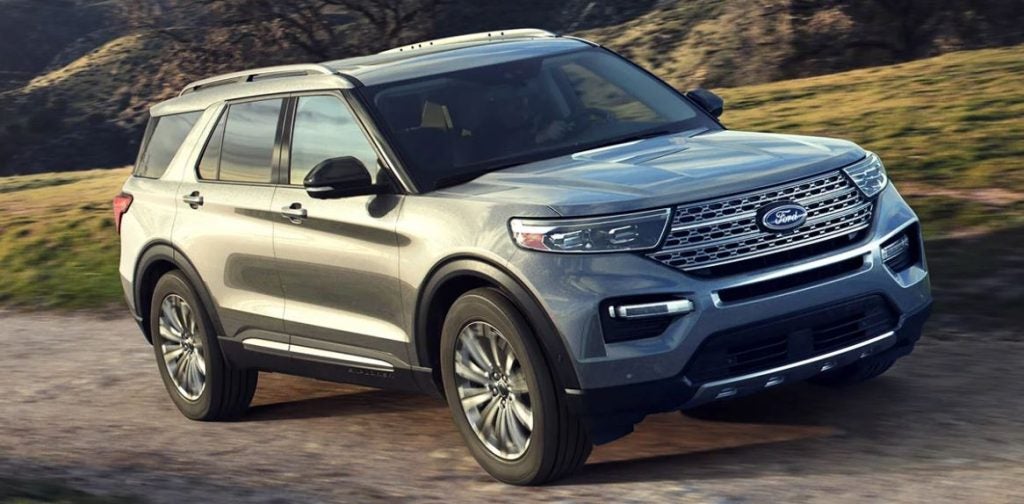
Silver 2022 Ford Explorer parked on a gravel road. | Ford Explorer in Jacksonville, AR.

Car AC Not Working? Visit Your Ford Dealer Today

Your car AC not working won't prevent you from driving. It can, however, it does make driving more unpleasant. As your Ford dealer, we want you to enjoy every minute of your Ford. We can fix your AC problem very quickly. These are a few signs that your AC is on the fritz. Damaged Expansion Valve The expansion valve in your AC regulates the flow of refrigerant. Refrigerant is the gas that enables your AC to work by cooling the air. The valve receives signals to open or close depending on the amount of refrigerant in the system. When the valve opens, the compressor will pump refrigerant, and the compressor shuts down when the valve closes. The valve is a vital part of the system, and if it's damaged your AC will develop problems. If the valve jams open, too much refrigerant will be released. This will damage the compressor and freeze the evaporator. If the valve jams closed, no refrigerant will be released, and your AC could overheat and suffer damage. Our technicians will test the valve and replace it if it's jammed. Leaking Refrigerant The refrigerant gas is essential for your AC. This highly-pressurized gas changes between gas and liquid states to cool the air for your AC. As the AC operates, the refrigerant absorbs heat from the air. The heat is then removed, and the refrigerant is chilled to cool the air in your cabin. This process will continue as long as your AC is on. A refrigerant leak will not only produce hot air from your AC, but it will also lead to damage to the compressor and other AC components. This makes finding the leak a priority. Our technicians are highly-skilled at tracing AC leaks using UV dye and scanners. Once we've pinpointed the leak, we'll seal it and refill the refrigerant. You'll have cold air blowing through the system in no time. Blocked Drain Line Your AC produces water as part of the cooling process. This water has to be removed, and that's where the drain line comes in. Water collects in the evaporator heater tank and drains out the drain line. This line is the cause of the water you see pooled under your car when the AC has been running. The drain line runs behind the dash on the passenger side of the cabin and exits through the floor. A blocked drain line will cause the heater tank to fill up, and eventually overflow. The water will then run out onto the passenger carpet. Our technicians can unblock the drain line to fix this problem. If your AC lets you down, call us at Crain Ford Jacksonville. Our technicians will fix the problem for you. Image via Ford.
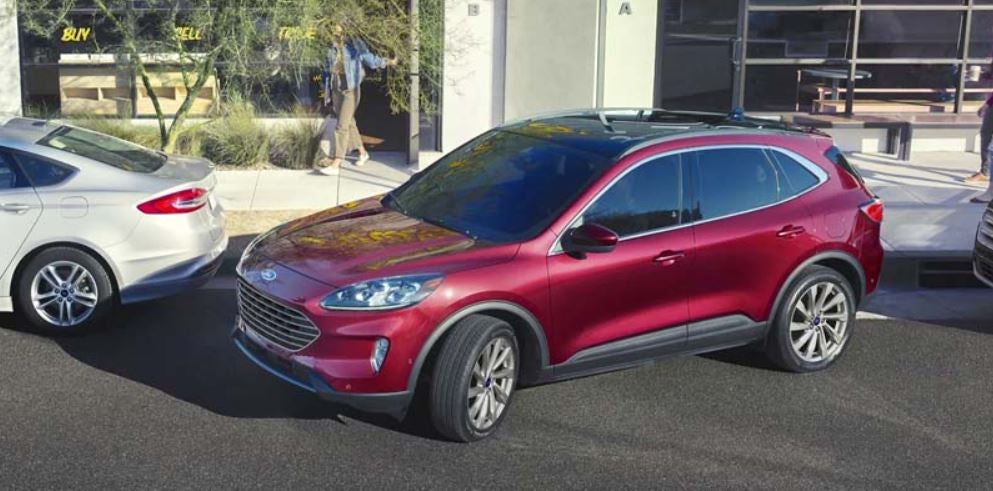
A dark red 2022 Ford Escape being parallel parked in front of a building. | Ford service center in Jacksonville, AR

Signs You Need a New Car Battery From Your Ford Dealer

Your Ford's battery provides the power to start your engine, and it maintains all of your car's electrical systems. A battery, however, has a relatively short lifespan. On average, your battery will need to be replaced in three to five years. As your Ford dealer, we'd like you to know some of the signs that we need to fit a new car battery for you. Rotten Egg Smell A rotten egg smell wafting from your engine compartment means that your battery is failing. Your battery contains a variety of chemicals, and the chemical reactions allow your battery to store electricity. One of the main chemicals is sulfuric acid. This acid is essential for your battery, but it will break down over time and release hydrogen gas. Hydrogen gas can escape from the battery, and it will mix with other chemicals in the air. The hydrogen will form hydrogen sulfide, a dangerous and colorless gas. Hydrogen sulfide has a characteristic smell of rotten eggs. When you smell this, your battery is starting to fail. We can't repair the battery, but we can fit a new one for you. Corroded Terminals Your battery has positive and negative terminals which allow it to transfer and receive electricity. These terminals are a prime candidate for corrosion by the hydrogen sulfide mentioned above. Hydrogen sulfide gas is drawn to the battery terminals, and it will produce an acidic salt on them. This acidic salt slowly degrades the terminals. The hydrogen sulfide from a worn battery can also corrode other parts of your car, including the battery cables. As the terminals and cables begin to corrode, your battery will become even weaker. Our technicians will need to replace your battery and check the cables and other parts for signs of corrosion. A Worn Alternator A battery stores electricity, but doesn't produce it. Your alternator is responsible for recharging your battery. If your alternator is working as it should, your battery will always be at full capacity. When your alternator starts to fail, it will begin producing less electricity. The lack of velocity affects all of your Ford's electrical systems, and it will also affect your battery recharging. As the power supply from the alternator drops, your battery will receive less electricity when it's being recharged. As the amount of power in starting your car remains the same, this means your battery will become steadily weaker in time. If the alternator isn't fixed, your battery will eventually die. A dead battery can easily leave you stranded. If you suspect you have a battery problem, call our service department right away at Crain Ford Jacksonville. Our Ford-trained technicians will fix it for you. Image via Ford.

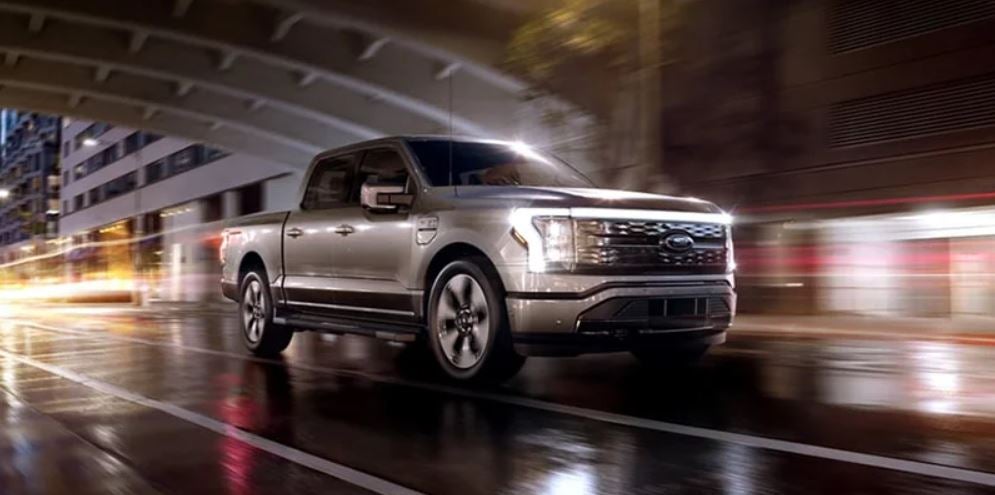
A silver 2022 Ford F-150 Lightning being driven on the wet highway. | Ford dealer in Jacksonville, AR.

How to Find a Quality Collision Repair for Your Ford

Accidents are always unexpected. If you are involved in an accident, the most important thing is that you and any passengers are safe. Once the initial shock is over, your next thoughts are likely to be where and how your car can be repaired. As your Ford dealer, we have expert knowledge of all Ford vehicles, and the ability to produce the quality collision repair you and your Ford deserve. This is how we'll proceed to repair your car. Assessment When your vehicle arrives at our repair center, one of our expert technicians will be assigned to assess the damage. The technician will document all of the visible damage, both interior, and exterior. While your car is being inspected, other members of our team will help you with the check-in. We keep a complete record of all of our clients, and we'll update your details. We'll ask for the details of your insurance company if your insurance is handling the repair. We can also assist with a rental car if you need one. Report and Insurance Once our technician has finished the assessment, we'll prepare a quotation. If you're arranging the repair yourself, we'll give you a copy and await your instructions. If your insurance company is arranging the repair, we'll send the quote to them. Our team will liaise with your insurance company to provide any information they require. Your insurance company may also send one of their assessors to examine the extent of the damage. Approval and Disassembly Once the repair work is approved by you or your insurance company, our repair team will remove all of the damaged parts. Our parts department will have already ordered and assembled replacement parts for your car. We only use genuine Ford parts, as they will fit perfectly and work exactly like the original parts on your car. If any parts need to be painted, they will be sent to our painting department where your Ford's color will be matched. Repair Depending on the extent of the damage, we may assign several teams to work on your car. Our customer service members will keep you informed on the progress. Our Ford-trained technicians can handle any repairs from structural reshaping to installing ornamental panels. All of the work will follow Ford's strict repair procedures. Quality Check and Return Once the repairs are complete, your car will be checked again by our quality control. Once this requirement is passed, your car will be ready for collection. Your car will now look identical to how it was when you first saw it in our showroom. When you need any repairs, call the experts at your local Ford dealer at Crain Ford Jacksonville. Image via Ford.

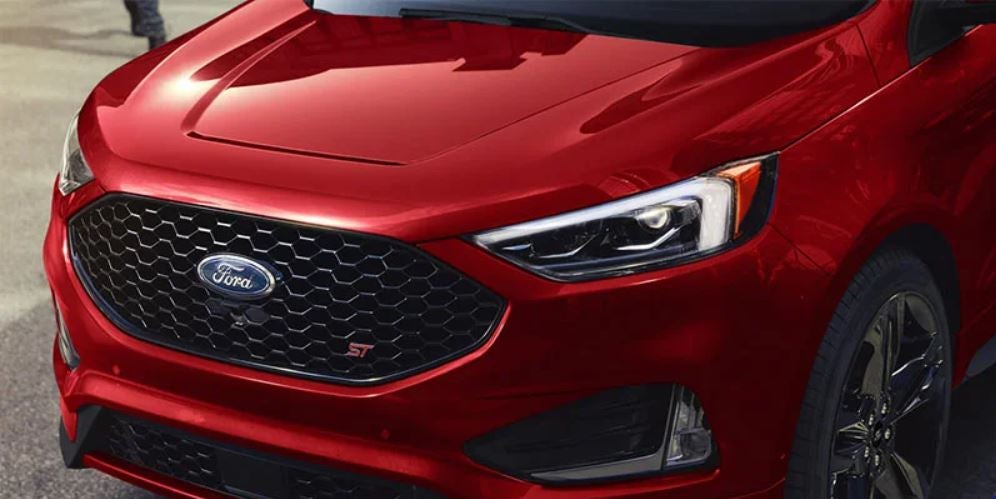
Close view of the front grille area of a red 2022 Ford Edge. | Ford dealer in Jacksonville, AR

4 Signs It May Be Time for Your Ford to Get New Headlights

When on the road at night, visibility is vital for your safety. All drivers need periodical headlight replacement when their bulbs begin to falter. Let's take a look at four signs that you should visit your local Ford dealer for a set of new headlights. Dimming Brightness Headlight bulbs can lose a great deal of their original brightness before finally giving up the ghost. This is especially the case with high-intensity discharge (HID) bulbs and light-emitting diode (LED) bulbs. Both types have remarkably long lifespans but can also lose up to 70% of their brightness before the end. Needless to say, don't wait for your bulbs to fail so far before having them replaced. Which Bulb Do You Use? There are three types of headlamp bulbs: HID, LED, and traditional halogen bulbs. HID and LED bulbs are brighter, longer-lasting, and more expensive as well. The only advantages halogen bulbs have are the lower price tag and the fact that they don't lose any brightness before they run out of steam. If you're not sure which bulb type your Ford currently uses, you can look at the light and beam pattern they emit. To do so, face your car to a garage door and switch on the headlights. If you see warm yellow light, you have halogen bulbs, while white light means HID or LED bulbs. LED bulbs will instantly turn on at maximum brightness, while HID bulbs will flash for a few seconds and slowly build to maximum brightness. Flickering Light If the light ahead of your car begins flickering, it's quite likely that a filament is loose in one of your bulbs. That bulb is on its very last legs and has become distracting to other drivers, so it needs to be replaced. There's a chance that the flickering was created by a loose or faulty connection. You'll know if that's the case as soon as you put a new bulb in. One Bulb Dies If one bulb dies altogether, then your bulbs probably need replacing. It's statistically unusual for both headlight bulbs to die at once. If that happens, the problem is probably with your battery, wiring, or something else in the charging system. Do Headlight Replacement in Pairs When one bulb fails, you should replace both headlights because a bulb's rate of deterioration accelerates as it ages. This means if one bulb is dying, the other is usually close behind. It's best to buy bulbs in pairs because otherwise, you might not be able to find a perfect match later on. In that case, you'll have mismatched headlights, which look a little odd. Enough Miles Pass Since You Bought Bulbs From Your Ford Dealer It's good to know the expected lifespan of your bulbs so you can anticipate the need for replacements. Halogen bulbs tend to last from 500 to 1,000 miles. HID bulbs can last anywhere from 2,000 to 8,000 miles, depending on the make. And super-durable LED bulbs can last for up to 30,000 miles. If you'd like to have your headlights inspected by certified technicians, visit Crain Ford of Jacksonville. We're a locally-trusted dealership dedicated to providing for all the vehicle purchasing and servicing needs of our customers with consistently excellent service. Image via Ford.

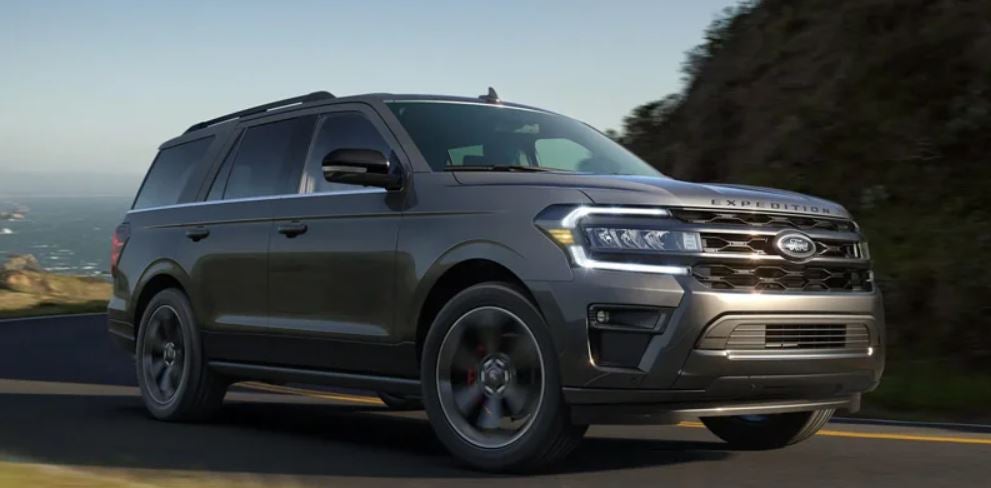
A gray 2022 Ford Expedition being driven on the highway. | Ford dealer in Jacksonville, AR.

Need a Car Safety Inspection?

Keeping up with your responsibilities as a vehicle owner is important to ensure that every drive you take is safe and secure. That's what makes getting your regular safety inspection such an essential part of ownership. Here are some of the benefits you'll enjoy from getting your inspection performed at your Ford dealer. How Often Should You Get Your Vehicle Inspected? Although Arkansas doesn't require annual inspections of your vehicle like some other states might, it is still an essential part of vehicle ownership. Most experts recommend that you get your vehicle inspected once a year. This will help to detect any potential problems early before they become a serious concern, allowing you to safely operate your vehicle. What Is Checked During an Inspection? A comprehensive inspection of your vehicle's safety will include every aspect of the vehicle. Here are some of the things the mechanic performing your inspection will look into. Exterior Some problems can be detected without even opening up your vehicle for a look inside. We'll check your windshield to ensure that there's no damage that might lead to further issues or reduced visibility. We'll also make sure that your windshield wipers are in good condition and replace them if needed. If there is any damage to your mirrors, these can also be replaced to give you visibility behind your vehicle. Engine Check Once the initial check is complete, we'll also take a look under the hood to diagnose any potential problems with your engine. We'll take a look to see if there's any signs of damage present or any leaking fluids. We'll also make sure that your coolant is at optimal levels and that the vehicle's battery is in good health, among other diagnostic tests. Brake System Operating your vehicle safely requires quality brakes that allow you to respond to obstacles crossing your path on the road. During an inspection, we'll make sure the brakes and brake pads are in good condition to make sure your brakes are there when you need them. The status of the emergency brake, or parking brake, will also be ascertained. You'll enjoy much more responsive brakes once all of the different parts are checked out. Steering and Alignment Being able to handle precisely is another crucial aspect of staying safe on the road, so our inspection will also make sure your steering and alignment are working correctly. Any worn-out parts of your vehicle's steering system will be replaced to reduce the risk of a component failing while you're trying to make a turn. We'll also make sure the shock absorbers aren't worn out so you get a smooth ride over any uneven terrain. Need to have your vehicle inspected, or have any other maintenance concerns? Our service department has the tools and expertise needed to keep your vehicle running as well as new for many years to come. Come on down to Crain Ford of Jacksonville today, and we'll take care of you! Image via Ford.

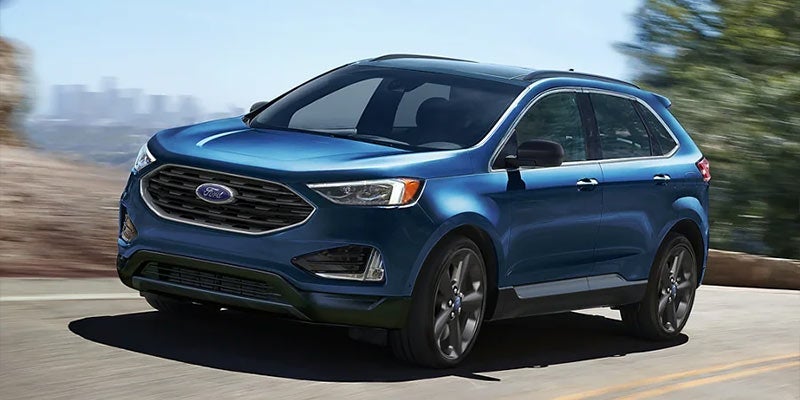
A blue 2022 Ford Edge being driven on the highway. | Ford dealer in Jacksonville, AR.

What Can You Learn From an Engine Diagnostic?

If you own a car, you know that it needs to be maintained to run well for a more extended period. What do you think is the most important thing about maintaining your vehicle? Oil changes and tire rotations can help keep your car running smoothly. However, another aspect of car care can help you save money in the long run: an engine diagnostic. Read on to discover what you'll learn by getting this service at your Ford dealer in Jacksonville, AR. Why a Warning Light Is On It's frightening to discover an illuminated light on the dashboard when your vehicle is inoperable. Something minor can trigger an illuminated light, but it could also indicate something significant. However, if you want to find out what's causing your car's service light to come on, bring it to your local service center for a diagnostic check. Your technician will be able to tell a lot more about what's going on with your automobile after performing this test. Brake Issues If you're concerned about brake issues, then you should consider taking your car to a service center for testing. The technicians in the service center will perform a diagnostic test so that they can pinpoint any problems. They might also be able to tell if all of the braking components are working safely and efficiently. Electric Misfires The engine will not run smoothly if it cannot communicate effectively with other components and within itself. Electronic and computerized systems may assist these basic operations to function seamlessly. If any of these components go out, a diagnostic should provide an immediate identification. nextpage Maintenance The check engine light is not always a cause for alarm. The engine, like any other dependable device, requires maintenance and monitoring in order to function at peak efficiency. Regular inspections and maintenance are therefore needed. The light on your car may be signaling something as simple as that it's time to change the oil. Transmission Issues The transmission system is complex, and it is critical for the vehicle to communicate with these components and other systems. It receives data from all of the different systems so that it can then issue commands accordingly. If any component fails or misfires, a diagnostic will determine this fault and then handle or facilitate a resolution. Why You Failed an Emissions Test You might be confused and unhappy if you failed an emissions test. This is understandable. But, if you want to figure out what's going on, you should bring your car in for a diagnostic test. A vehicle check can help your technician identify any unforeseen issues and assist in resolving the problem so that you may resume driving safely. Crain Ford Jacksonville offers comprehensive diagnostics to help you identify potential problems before they become costly repairs. If we find a problem, we can also repair an issue or mitigate it with preventative maintenance plans. We know that car care is essential and want you to be confident in your vehicle's performance. Give Crain Ford Jacksonville a call today for more information about how we can diagnose any issues. Image via Ford.

_Reasons_Not_to_Wait_to_Get_a_Brake_Repair_637614401226071348

5 Reasons Not to Wait to Get a Brake Repair

Putting off what does not immediately affect us is a habit just about everyone is guilty of. When that habit leads to delaying a haircut, we just end up looking shaggy; putting off brake repair, however, is a much different matter. Here are 5 reasons why ignoring brake problems is an awful idea and why getting the vehicle into a Ford dealer in Jacksonville, AR for repair as soon as possible is critical. 5 Reasons You Should Never Delay Brake Repair Vehicle Control Most drivers use their brakes almost continuously while driving. Brakes help the vehicle slow down in traffic, maintain control going around corners, avoid obstacles, etc. Because of that, worn brakes that need replacement can cause the driver to lose partial or total control of the vehicle. Diminished control of the vehicle in any capacity can lead to: Poor vehicle performance (gas mileage, wear and tear, etc.) Dangerous driving Vehicular accidents Stopping the Vehicle Limited brakes also affect the time and distance it takes to stop a vehicle. If the brakes are lost entirely, the vehicle will only stop when it loses forward momentum. That can cause problems when driving in traffic as well as when parking, navigating corners or making changes in speed. Greater Damage Damaged brakes that are not repaired can harm other parts of the vehicle. The most obvious example is when failed brakes cause an accident but even normal wear and tear on the vehicle is increased if the brakes are failing or worn through entirely. Excessive wear and tear from bad brakes can lead to tire, wheel, and braking system damage. The Law Motor vehicle law mandates that drivers always maintain control of their vehicles. When a vehicle's brakes are failing or failed, the driver does not have total control. That can lead to a ticket and/or influence the outcome of traffic accident investigations. Insurance Liability Insurance companies look for any way possible to avoid or reduce the amount of a policy payout even if the insurance company's client is at fault in an accident. If a vehicle with failed or failing brakes is involved in that accident and the insurance company finds out, they will use the state of the brakes against the driver of that vehicle to reduce their payout costs. There Are No Savings The point brake problems are noticed by a driver or discovered by a mechanic is the best condition those brakes will be in until they are fixed. Delaying repairing them only means risking more damage and potentially even more costly repairs. It will never be cheaper to get them repaired than it is right now. Your Local Ford dealer in Jacksonville, AR Dealer Can Help Ford only employs certified and competent mechanics. A repair job by a Ford mechanic means a vehicle's brakes will be fixed using the best parts and at an economical price. Failing brakes are not something to ignore. In fact, ignoring them can be costly and even deadly. If your vehicle needs brake work, contact Crain Ford in Jacksonville today.

Ford_Oil_Change_How_Often_Should_You_Get_Your_Fords_Oil_Changed_637571747097286637

Ford Oil Change Specifics: What Should I Know?

According to Ford's manufacturers, you need a Ford oil change every 5,000-10,000 miles. The frequency at which you'll need to change your oil depends on several factors. Some of these include whether you tow or not, how often you drive, and the typical length of the journeys you take in your Ford vehicle. We hope to educate you on knowing how often you need an oil change. We'll also discuss how you can tell if your oil has gone bad. Ford Oil Change Specifics: What Should I Know? The good news about oil in Ford vehicles is that your vehicle can tell you when you need a change. Modern Ford vehicles have a built-in meter for this. If you have an older Ford, head down to your dealership and ask how often you need an oil change. Tell the technician about your driving habits and your vehicle's history. Your technician will give you a rough idea of how often you should look for an oil change. If you still have your vehicle's manual, you should consult it to see what it says about oil changes. Some Ford manuals will tell you exactly how often you should be changing your oil. If your manual doesn't have the information you need, talk to a technician. You should also learn how to tell when you need an oil change; there are several key signs you should be aware of. How to Tell When You Need an Oil Change 1. Excessive Exhaust Fumes Modern vehicles don't emit visible gas through their tailpipe. If your tailpipe is smoking or sparking, you need to get your oil changed. Your oil isn't igniting correctly, and if left unchanged, the oil can damage the components of your engine. 2. Rapidly Decreasing Oil Level Your oil level goes down over time, but your oil levels aren't supposed to decrease rapidly. If you notice a sudden decrease in your oil levels, that's a sign that there's something wrong with your oil system. You need to get your oil system checked and repaired. After that, you need an oil change. 3. Unusually Loud Engine Your engine will get louder as it ages. Your engine gets louder if there's something wrong with the oil, too. Usually, it means your oil is strangely textured or thin. Getting your oil changed as soon as possible will help reduce engine damage. Your engine should be quiet again in no time; if it isn't, something's wrong with your engine, too. 4. Oil Texture Changes If you're checking your oil level and notice the oil's texture has changed, that's a problem. Your oil has become old, and you need to change it so your vehicle can run efficiently. Please take note that your oil darkens as it cycles through your engine. If your oil is darker but still holds a normal texture, that's not always a problem. If you're not sure about the state of your oil, then go to a dealership and consult a technician. Come and see us at Crain Ford Jacksonville for an oil change. We provide the best service we're capable of, and we use the best quality oil that we can access. With an oil change from us, you'll get plenty of mileage out of your Ford before needing another change.

Contact Us

Fill out this form below and we'll contact you shortly
*Required Fields