Blog / Jacksonville Ford Service

4 Signs It May Be Time for Your Ford to Get New Headlights

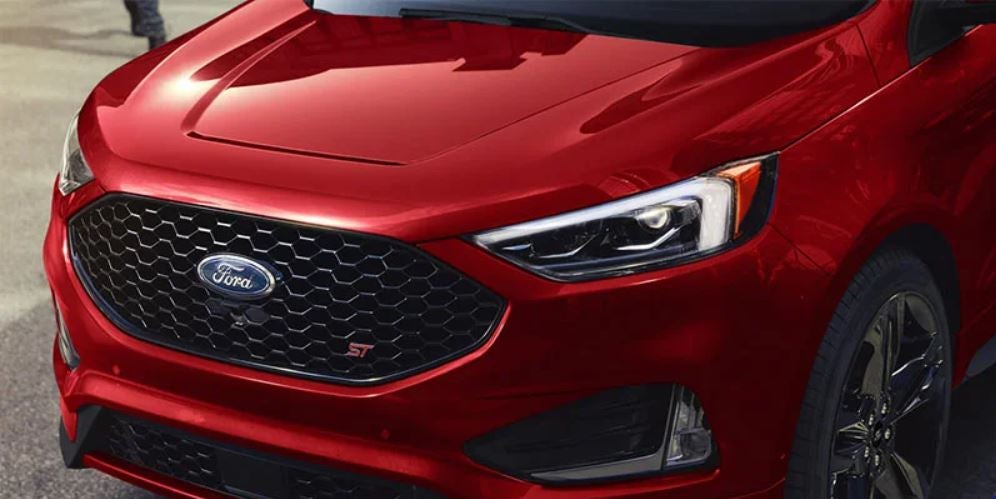
Close view of the front grille area of a red 2022 Ford Edge. | Ford dealer in Jacksonville, AR

When on the road at night, visibility is vital for your safety. All drivers need periodical headlight replacement when their bulbs begin to falter. Let's take a look at four signs that you should visit your local Ford dealer for a set of new headlights.

Dimming Brightness

Headlight bulbs can lose a great deal of their original brightness before finally giving up the ghost. This is especially the case with high-intensity discharge (HID) bulbs and light-emitting diode (LED) bulbs. Both types have remarkably long lifespans but can also lose up to 70% of their brightness before the end. Needless to say, don't wait for your bulbs to fail so far before having them replaced.

Which Bulb Do You Use?

There are three types of headlamp bulbs: HID, LED, and traditional halogen bulbs. HID and LED bulbs are brighter, longer-lasting, and more expensive as well. The only advantages halogen bulbs have are the lower price tag and the fact that they don't lose any brightness before they run out of steam.

If you're not sure which bulb type your Ford currently uses, you can look at the light and beam pattern they emit. To do so, face your car to a garage door and switch on the headlights. If you see warm yellow light, you have halogen bulbs, while white light means HID or LED bulbs. LED bulbs will instantly turn on at maximum brightness, while HID bulbs will flash for a few seconds and slowly build to maximum brightness.

Flickering Light

If the light ahead of your car begins flickering, it's quite likely that a filament is loose in one of your bulbs. That bulb is on its very last legs and has become distracting to other drivers, so it needs to be replaced. There's a chance that the flickering was created by a loose or faulty connection. You'll know if that's the case as soon as you put a new bulb in.

One Bulb Dies

If one bulb dies altogether, then your bulbs probably need replacing. It's statistically unusual for both headlight bulbs to die at once. If that happens, the problem is probably with your battery, wiring, or something else in the charging system.

Do Headlight Replacement in Pairs

When one bulb fails, you should replace both headlights because a bulb's rate of deterioration accelerates as it ages. This means if one bulb is dying, the other is usually close behind. It's best to buy bulbs in pairs because otherwise, you might not be able to find a perfect match later on. In that case, you'll have mismatched headlights, which look a little odd.

Enough Miles Pass Since You Bought Bulbs From Your Ford Dealer

It's good to know the expected lifespan of your bulbs so you can anticipate the need for replacements. Halogen bulbs tend to last from 500 to 1,000 miles. HID bulbs can last anywhere from 2,000 to 8,000 miles, depending on the make. And super-durable LED bulbs can last for up to 30,000 miles.

If you'd like to have your headlights inspected by certified technicians, visit Crain Ford of Jacksonville. We're a locally-trusted dealership dedicated to providing for all the vehicle purchasing and servicing needs of our customers with consistently excellent service.

Image via Ford.

Posted in:

Related Posts

A silver 2023 Ford Edge being driven on the road with buildings in the background. | Ford service in Jacksonville, AR.

How to Tell When Your Ford Needs a Radiator Repair

Is Ford's engine hotter than usual? Although there are several causes for the increased heat, the most typical is a faulty radiator. Do you want to maintain your car's peak performance? Watch out for the following signs to know if you need a radiator repair before consulting with your Ford dealer in Jacksonville, AR. Your Engine Has Temperatures That Are Too High When your engine's temperatures rise, your vehicle will gradually overheat. When this happens, check your Ford's temperature device on the dashboard tool panel to determine if its meter has risen above the middle. Typically, high temperatures imply issues with your radiator. Inspect the radiator immediately before the temperature rises further. At best, you may need more coolant. Still, don't risk damaging your engine permanently by driving the overheated car. Seek expert inspection. Your Engine Releases White Smoke When an abnormal amount of white smoke emanates from your car's engine, know there's an issue worth addressing. In general, white smoke may indicate leakage in the internal coolant system. This arises when your engine burns up your coolant, which exits through the exhaust. Although the issue might not cause alarm, have your dealer inspect the white smoke's origin to be safe. Your Vehicle Has a Poor Heating System Do you feel like your vehicle heater's system is compromised? Is your heater not efficient? If yes, you may have an issue with your radiator. Hot coolant fluid keeps your car heater power. When your radiator is compromised, it won't heat the coolant fluid sufficiently. Apart from experiencing excess heat, you'll also experience too much cold, which is more apparent during the cold season. Your Coolant Leaks on the Ground One of the most visible signs of a faulty radiator is having a coolant leakage underneath your vehicle. Are there drips or puddles of a bright green substance underneath it? This generally implies a leak in the radiator, which can cause permanent damage to your engine. Because the source of the leak could be your hose or other parts of your vehicle's cooling system, you shouldn't diagnose the problem yourself. We can help you identify whether your radiator is cracked and needs a replacement by conducting a pressure test. Your Radiator Discolors and Rusts When exposed to moisture and fluids for a long time, your radiator will start to look rusty because it's made up of metal. So, watch out for color changes. In some cases, the rust might be accompanied by sludge. Note that rust in your radiator can permanently damage your vehicle. The only way to get rid of it is by having your dealer flush your entire system. We not only specialize in flushing but also in replacing the corroded parts in your system. We are well aware that a simple flush is not adequate to fix the problem. If you've spotted any one of these signs, don't hesitate. Seek expert assessment today. Stop by Crain Ford of Jacksonville today and have your vehicle assessed.

A parked, blue 2023 Ford Escape. | Ford service in Jacksonville, AR.

What Happens During a Routine Ford Transmission Service?

Automobiles are designed to carry the driver, passengers, and cargo from a starting point to their intended destination. We can argue about which vehicle components are most vital, but to adjust speed to navigate safely through traffic, you'll need a transmission. Like other systems, transmissions require periodic maintenance. As your Ford dealer in Jacksonville, AR, Crain is the ideal place to have that maintenance done. What does Ford transmission service entail? Let us lay it out for you. How Often Should You Visit Your Jacksonville, AR Ford Dealer to Service Your Car or Truck's Transmission? Transmissions typically don't require service as frequently as engine, radiator, and brake systems. The usual range for changing transmission fluids and filters lies between 30,000 and 60,000 miles, with greater frequency recommended for vehicles used for towing. Check your owner's manual for a more precise figure for your particular vehicle. If you can't find your manual, you can usually obtain a copy online. Owners' manuals for most makes, models, and years can be downloaded at no charge. What Is the Difference Between a Transmission Fluid Change and Flush? Transmission flushes are more thorough than regular fluid changes, replacing the fluids in the lines and other portions of the transmission, as well as in the pan. Like engine oil, transmission fluid cools and lubricates the gears and other moving parts in your transmission. It often contains additives to keep everything clean. Over time and extensive use, dirt accumulates in the fluid. If it is dark and murky, rather than the normal red or green, a fluid change won't be sufficient. A transmission flush will be required. Does It Matter Whether Your Vehicle Has an Automatic or Manual Transmission? Automatic and manual transmissions differ in two key manners. Manual transmissions experience higher degrees of friction, whereas temperatures tend to rise much higher in automatics. As a result, each requires different fluids. Your Crain Ford technician will know the difference and service your vehicle accordingly. What Are the Warning Signs for Transmission Problems? Aside from the most obvious indicator (the blinking transmission light on your dashboard array), certain sights and sounds could be warning you that your transmission needs service. Grinding If your gears make a grinding noise when changing, it's a sure sign things are not going smoothly and it's time to have your transmission checked. Hesitation If there is a momentary delay between shifting and gear change, that is also an indication your transmission is failing. Smell Just as with the engine, an acrid, burning odor is a clear warning that something is wrong. Have your vehicle checked immediately. Seepage Keep an eye on your garage floor or driveway. When oily stains appear, it's a telling sign that fluids are leaking from your vehicle. If they're of a red or green tinge, it could be transmission fluid. What Does Crain Ford Transmission Service Entail? A full service of your transmission at Crain Ford includes a flush, gasket, fluid change, filter replacement, hose and pan inspection, and a multi-point inspection on all other transmission components. Our service technicians are highly trained and OEM-certified experts. Don't wait for your vehicle to develop transmission troubles or any other problems. Come into Crain Ford or make a service appointment now. We'll keep it running like a dream. Image via Ford.

Silver 2022 Ford Mustang being driven on the highway. | Ford service center in Jacksonville, AR.

The Top 6 Signs of a Faulty Ignition Coil

While on the road, ignition coils turn the relatively low voltage of a car's battery into a whopping 30,000 to 40,000 volts to ignite the combustion process. Each of your coils should last 100,000 miles or more, but eventually, all ignition coils start to falter. Here are the symptoms of a faulty ignition coil to look out for. If you notice the following issues, visit your local Ford dealer to have the malfunctioning coil cleaned or replaced. Misfiring Engine A spark plug relies on its ignition coil to keep firing more than 30 times per second. This steady stream of sparks continually ignites the fuel-air mixture inside each combustion chamber, powering your engine. If one of your ignition coils stops doing its job properly, the corresponding combustion chamber will start misfiring. You're likely to hear the engine coughing and sputtering. It might also jolt and shudder. Rough Idling Even with just one failing ignition coil, your engine will begin to struggle when idling. Rough idling feels like the engine might fail altogether at any moment. And if more than one of your ignition coils falters, you might indeed stall while pausing at a traffic light. Loss of Power While working less efficiently, your engine will lose some of its power. This is often most noticeable when attempting to accelerate. It becomes dangerous to overtake other vehicles as you might not have access to the necessary burst of speed. Falling Gas Mileage When a coil breaks down, your engine keeps injecting fuel into the cylinders at the same rate. But this fuel is no longer combusting as efficiently as it should. The result is reduced fuel efficiency and less bang for your buck at the gas station. Backfiring When the fuel-air mixture inside a combustion chamber stops burning away properly, an excess of fuel can build up in the chamber. This excess fuel can build up and then suddenly be released into the scorching-hot exhaust headers. This sometimes causes a bang as it ignites and you'll often see black smoke emitting from your tailpipe. Car Won't Start With one failing ignition coil, you'll often find it harder to start your engine in the morning. If more than one ignition coil has bitten the dust, you might not be able to start your car at all. How a Ford Dealer Inspects Your Coils When a technician takes a look at an ignition coil, they can check the voltage with a multimeter tool and also with a spark test. They can also swap out the coil with a new one to see if that clears up the engine trouble. A failed ignition coil can sometimes be cleaned to restore functionality. But more often, it will need to be replaced. Visit Crain Ford of Jacksonville today to have your ignition coils examined, cleaned, or replaced. Our courteous, knowledgeable staff can guide you through our extensive range of vehicles and services. Image via Ford.